


Francis Wong
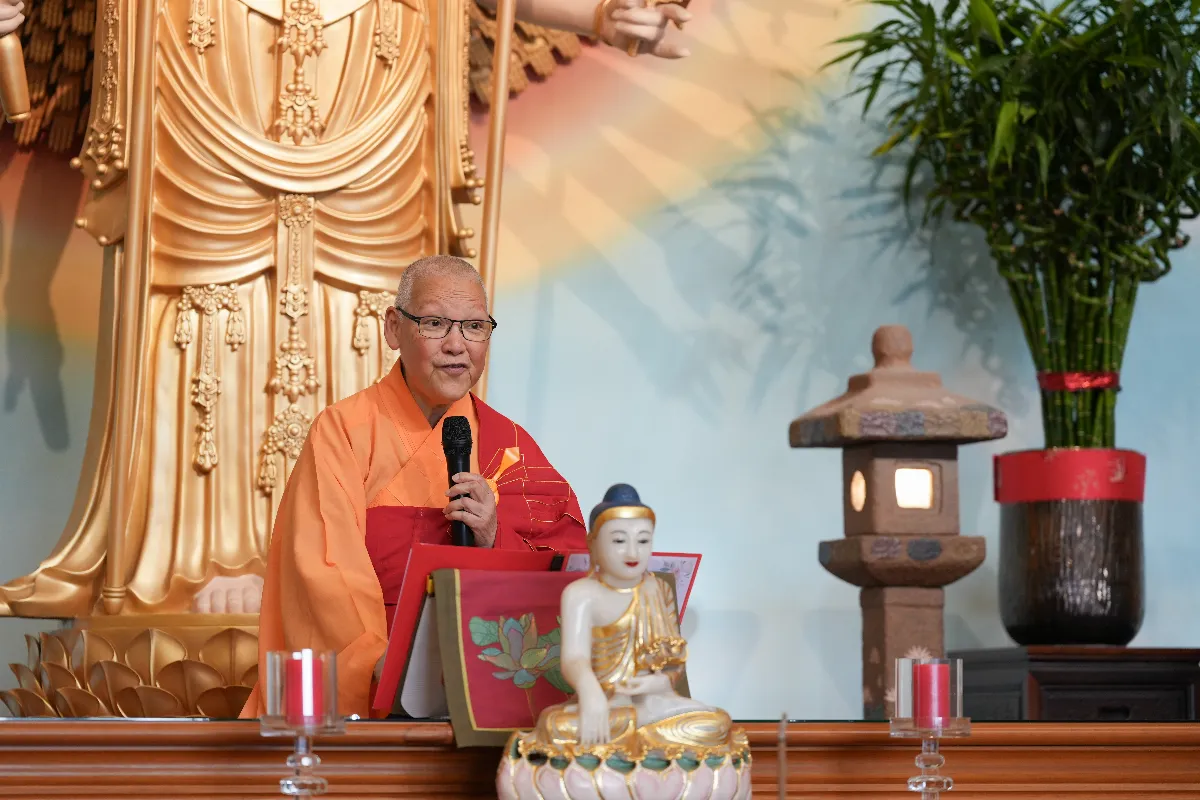
On August 8, Fo Guang Shan Nan Tien Temple organised a unique Buddhist wedding in the Front Shrine. Venerable Miao You, a board member of Nan Tien Institute, presided and bestowed blessings. In the presence of the Buddhas and Bodhisattvas, Western couple Kelvin Fussel and Michelle Plant joined in marriage, witnessed by over 30 relatives and friends, in a warm ceremony that harmoniously blended Eastern and Western cultures.
The groom, Kelvin, a firefighter, and the bride, Michelle, a senior natural resources officer, first encountered Nan Tien Temple through a “One-Day Meditation Retreat.” They deeply resonated with the Buddha’s teachings of compassion, kindness, respect for life, and reverence for all beings. At this milestone moment in life, they chose to make their lifelong vows in the solemn temple setting, incorporating “One-Day Meditation” into their wedding as a precious gift to share their faith and values with loved ones.
On the wedding day, Venerable Zhi Li, Director of the temple’s Community Education Department, carefully arranged a “One-Day Meditation Retreat” for guests, guiding them through meditation, Tai-chi, and meditation walking. These activities cultivated a serene and reflective atmosphere, allowing participants to purify body and mind and to experience Buddhist wisdom in depth, preparing them to receive the blessing ritual with clarity of heart.
Venerable Miao You explained that Buddhism views marriage as “walking the path of life together with mindfulness and joy.” This reflects both the Buddha’s teachings and modern views of marriage. Venerable encouraged the couple to support each other with kindness, build a happy family through trust and shared vision, and, under the blessings of the Triple Gem, live in harmony with all beings while planting seeds of goodness.
As part of the ceremony, the couple invited all guests to offer incense before the Buddha. In Buddhism, incense symbolizes purity of body and mind, and the rising smoke spreading in all directions represents virtues and blessings pervading the world and reaching all beings. By offering incense, the guests not only paid respect but also conveyed their most sincere wishes for the couple—to walk together in compassion, with love and Dharma joy, growing hand in hand in a union of lasting harmony.
As a blended family, Kelvin and Michelle brought together children from previous relationships, embarking on a new chapter of life together. They shared that after four years of mutual care, strong bonds had formed between each other’s children. The family cherishes their unity and hopes that by practicing peace and mindfulness, they can provide comfort and support in times of life’s challenges. Before the Buddha, the couple made solemn vows to respect, protect, and support one another, to take responsibility for their family with love, appreciation, and unwavering commitment, and to walk into the future together.
Kelvin’s three daughters, Belinda, Caitlin, and Megan, said that the ceremony was especially meaningful—far more peaceful and serene than conventional weddings—and they wholeheartedly offered their blessings. Michelle’s son, Myles, was particularly touched by his mother’s choice of a Buddhist wedding, finding the meditation component deeply aligned with his own values and lifestyle. He expressed admiration for the temple’s sacred atmosphere and the beauty of Buddhist art, and shared his aspiration to one day hold his own wedding at Nan Tien Temple.
First-time attendees of a Buddhist wedding—Linda, Leah, and David—were equally impressed. David described it as “an extraordinary and inspiring experience.” Leah praised the solemnity and sanctity of the meditation and chanting. Linda reflected that the pre-wedding “One-Day Meditation” gave all the guests a chance to enter the ceremony with tranquillity and clarity, perfectly harmonizing the ritual with the couple’s life philosophy.
This Buddhist wedding not only celebrated the union of two lives, but also embodied the inclusiveness and universal values of Humanistic Buddhism. The joy of meditation and Dharma transcended cultural and national boundaries, weaving a touching symphony of East-West spiritual exchange in compassion and wisdom. It stands as a vivid expression of Fo Guang Shan’s vision of “Humanistic Buddhism”—that the Dharma belongs to all, regardless of race or nationality, guiding beings with compassion and wisdom toward finding spiritual belonging on the path to awakening.
評論(0)
目前沒有評論,歡迎分享您的看法。
登入會員後即可發表評論、回覆及讚。